

SA'DIA REHMAN
MARKERS
9.18.26 - 11.21.26
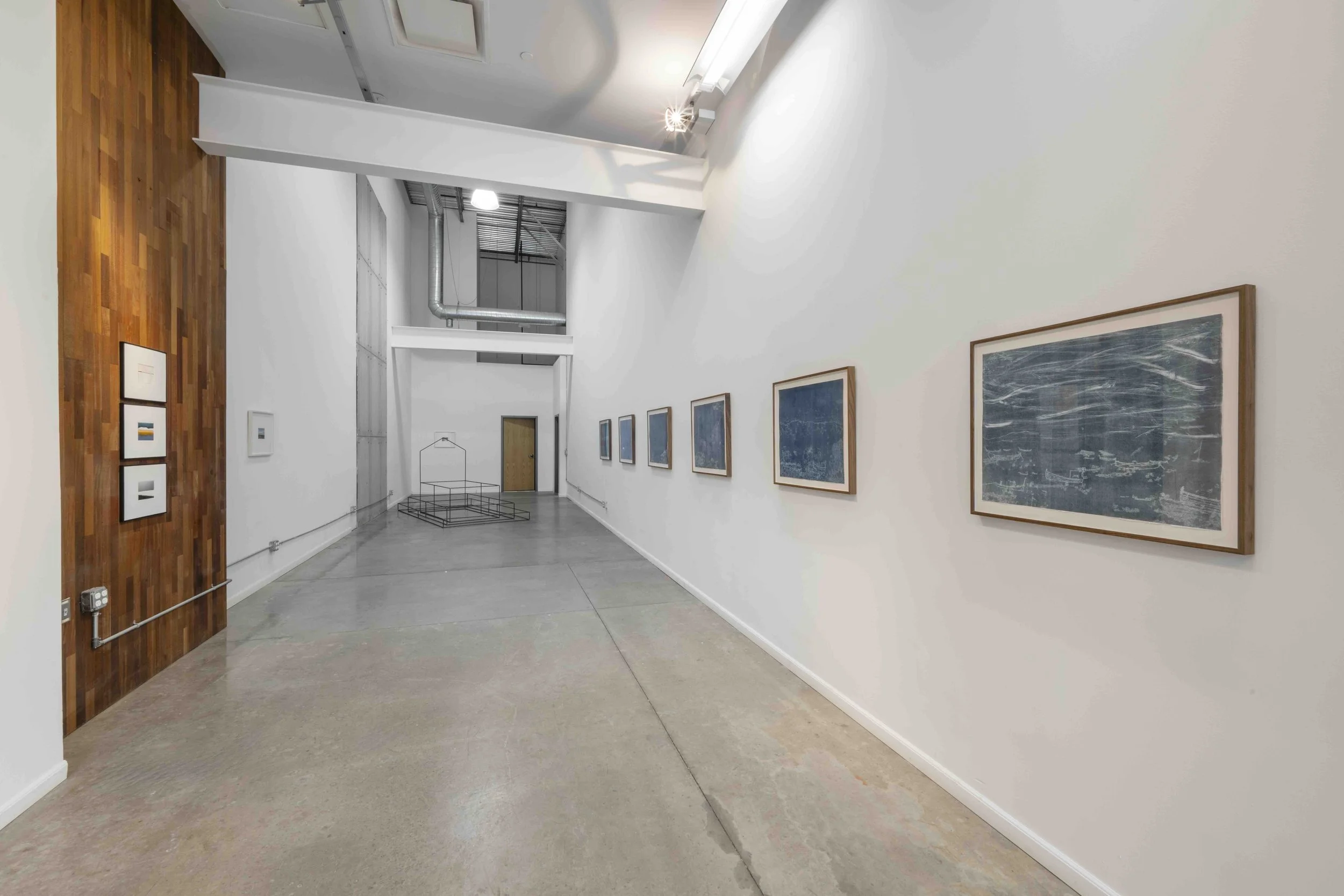
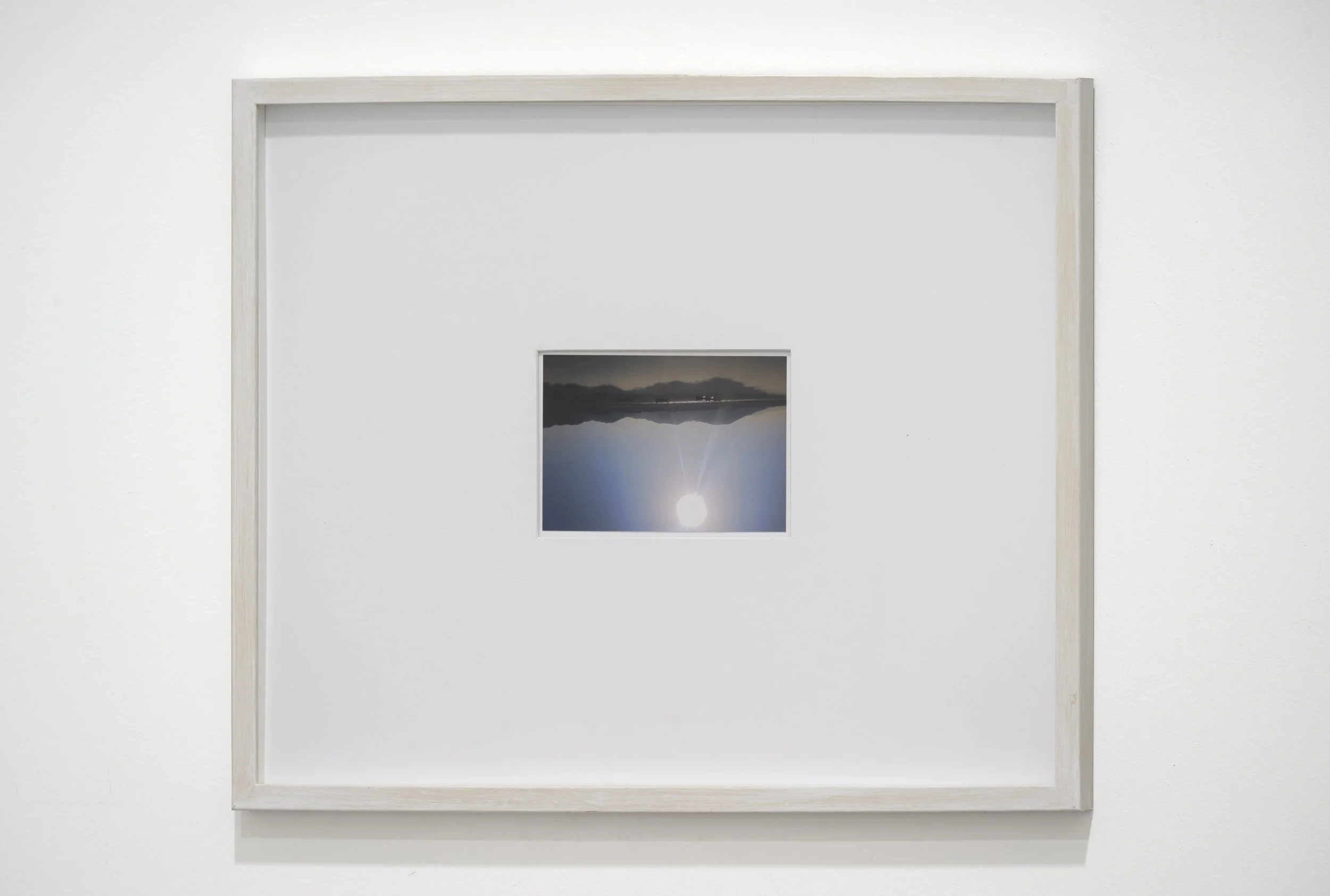
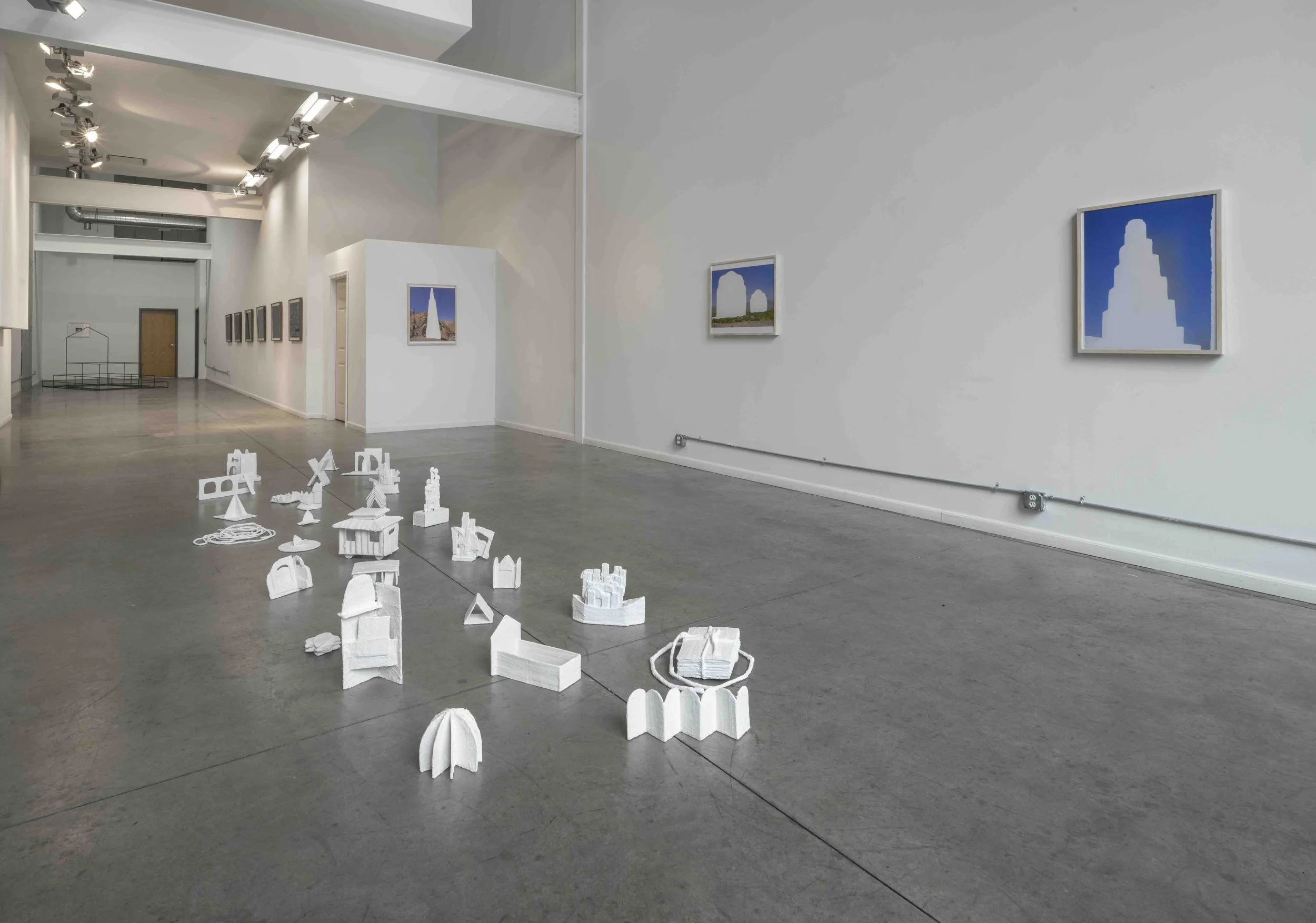
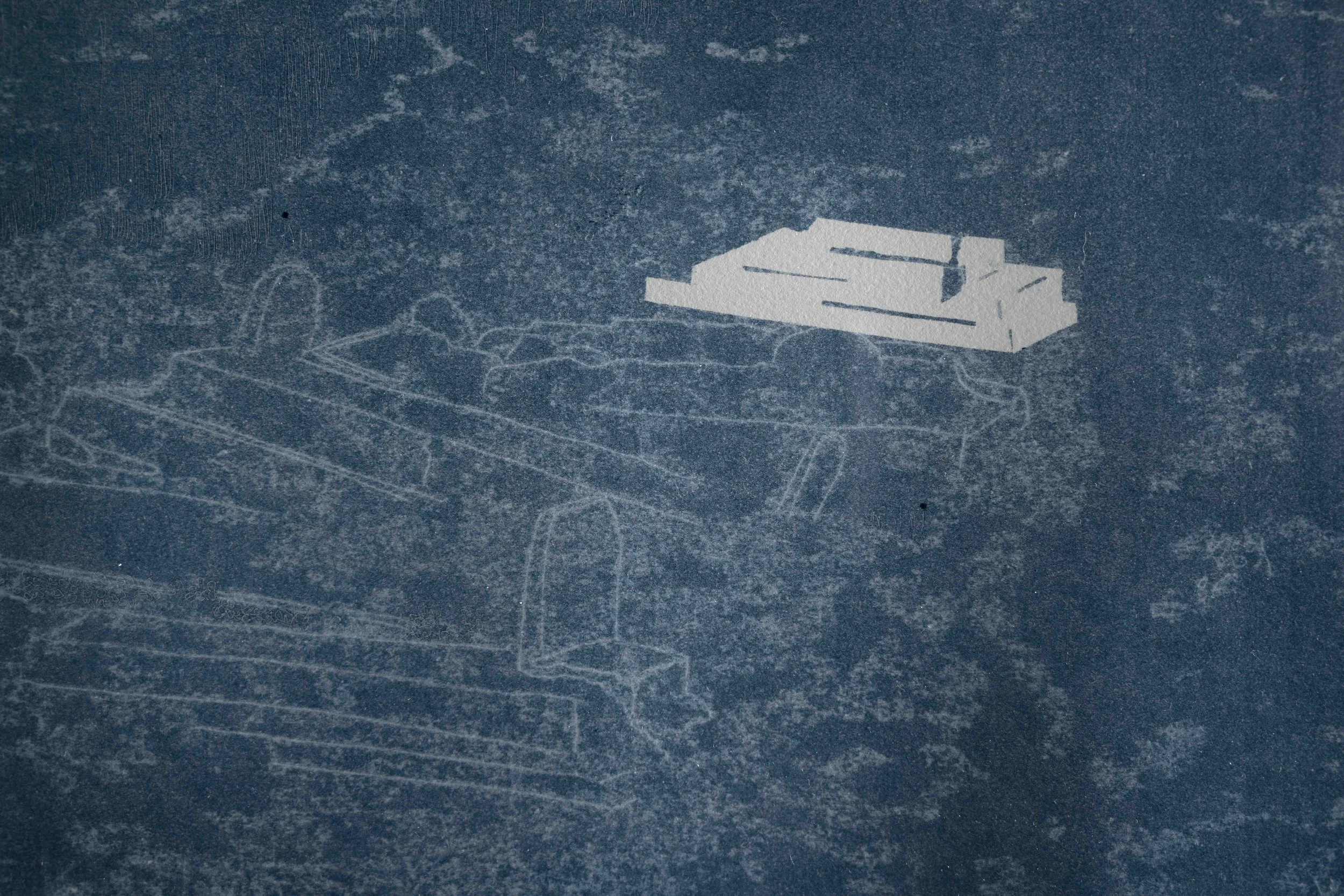
Opening Sep 18th 6-8pm 3008 Hennepin Ave.
Curatorial Statement
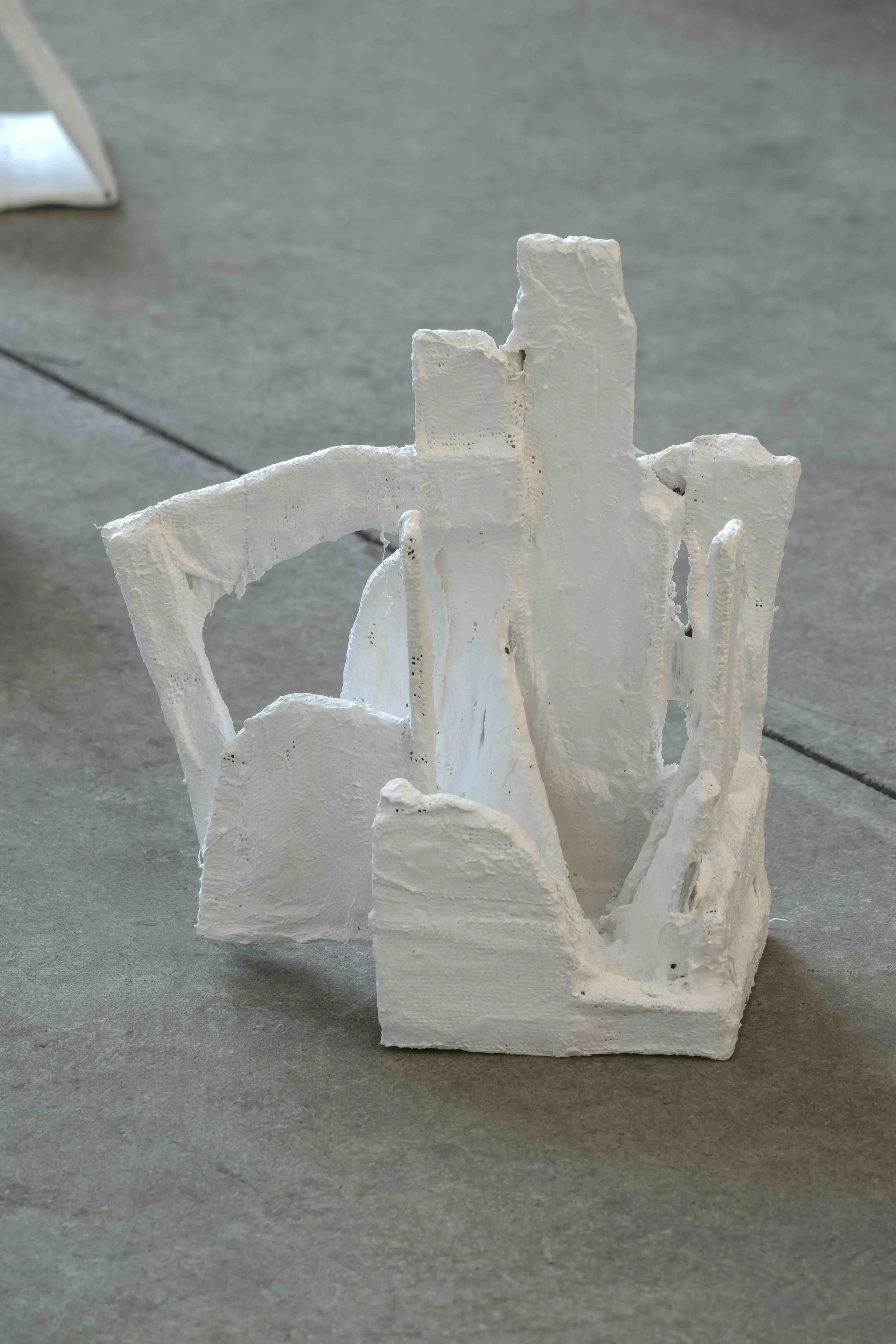
Sa’dia Rehman’s Markers concerns the narrative territories inherited through kinship: the embodied, affective, and often fragmentary forms through which family history is transmitted and encoded into experience. At the same time, their work maps the contemporary image economy, interrogating both its territorial claims and the increasingly exhausted critical force of appropriation within recent art history.
On the second point, found art historically reanimates the detritus of everyday life. Once an eccentric strategy associated with Surrealism’s disruption of bourgeois taste, it has since become a dominant vernacular of the contemporary image economy. In the accelerated, improvisational terrain of social media, appropriation increasingly functions as a formula: influencers, consumers, and homemakers alike enact a mantra less akin to “I think, therefore I am” than “I found, therefore I think.” The psychic charge once associated with appropriation—its capacity to estrange, unsettle, or revalue—now often dissipates almost immediately. The contemporary media environment resembles a found-art slot machine: images circulate endlessly, while meaningful returns remain rare.
Sa’dia Rehman’s work operates according to a markedly longer temporal horizon. It interrupts the familiar visual and conceptual economies of reclamation by resisting binaries of high and low, East and West, visible and invisible, past and present, foreign country and homeland, adopted and nuclear family.
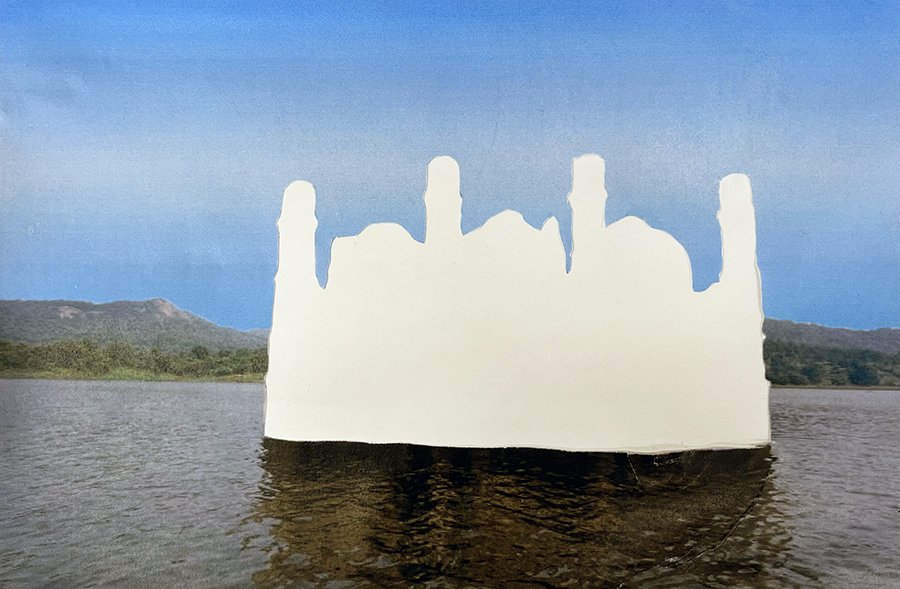
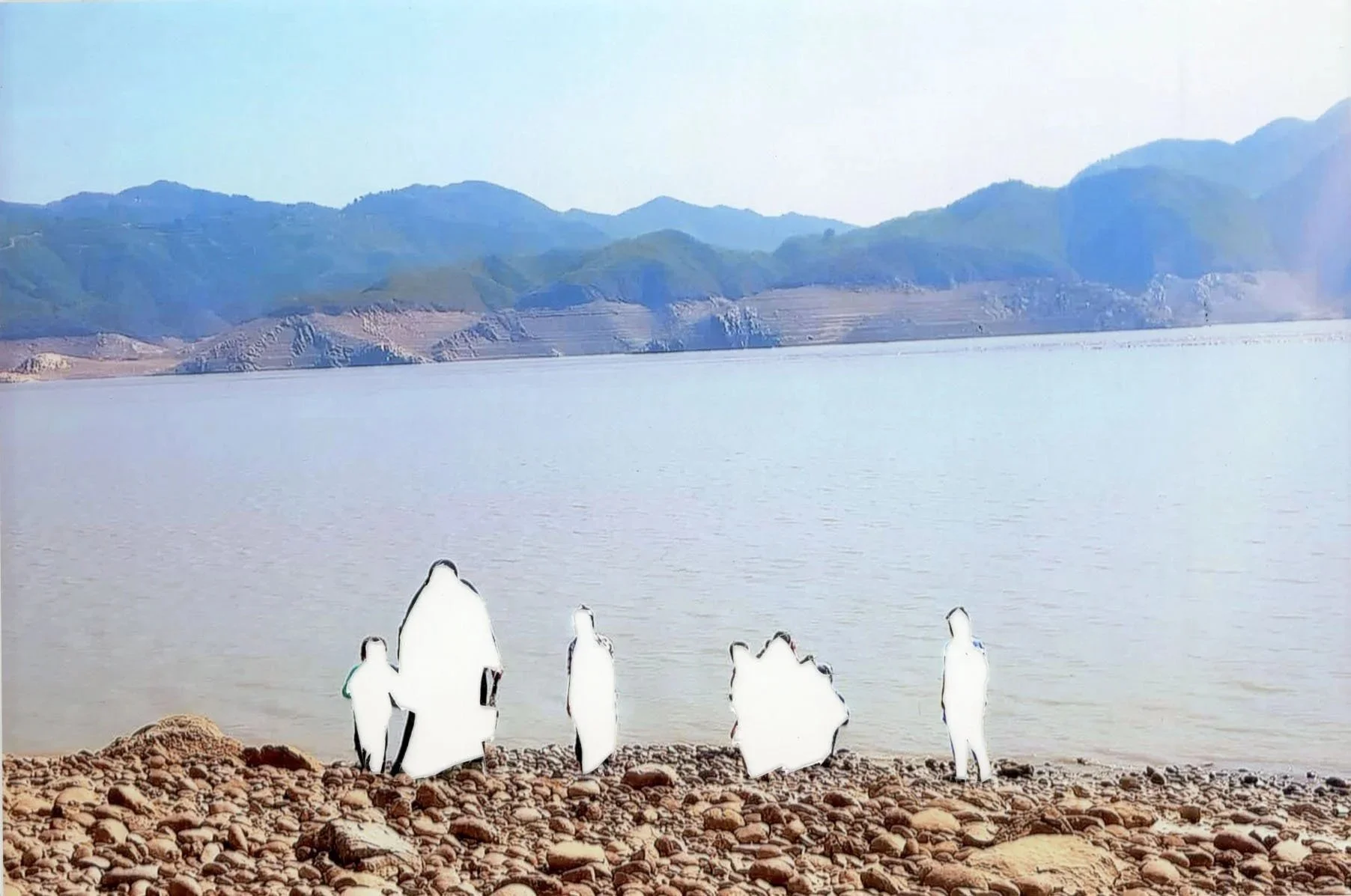
Their point of departure is not the found object as art-historical category, but found territory: a landscape encountered after displacement, in which relocation becomes both material condition and inherited memory. As Rehman recounts, “After my father’s family was displaced from Khar Kot, [Pakistan], there were several temporary relocations. Eventually they were set up in a village with arid land near Haripur, a small city approximately fifty miles of rugged terrain away from Khar Kot.” To rebuild a life after one’s town and home have been submerged through engineering intervention necessitates a different psychic and ethical relation to salvage, recovery, and appropriation.
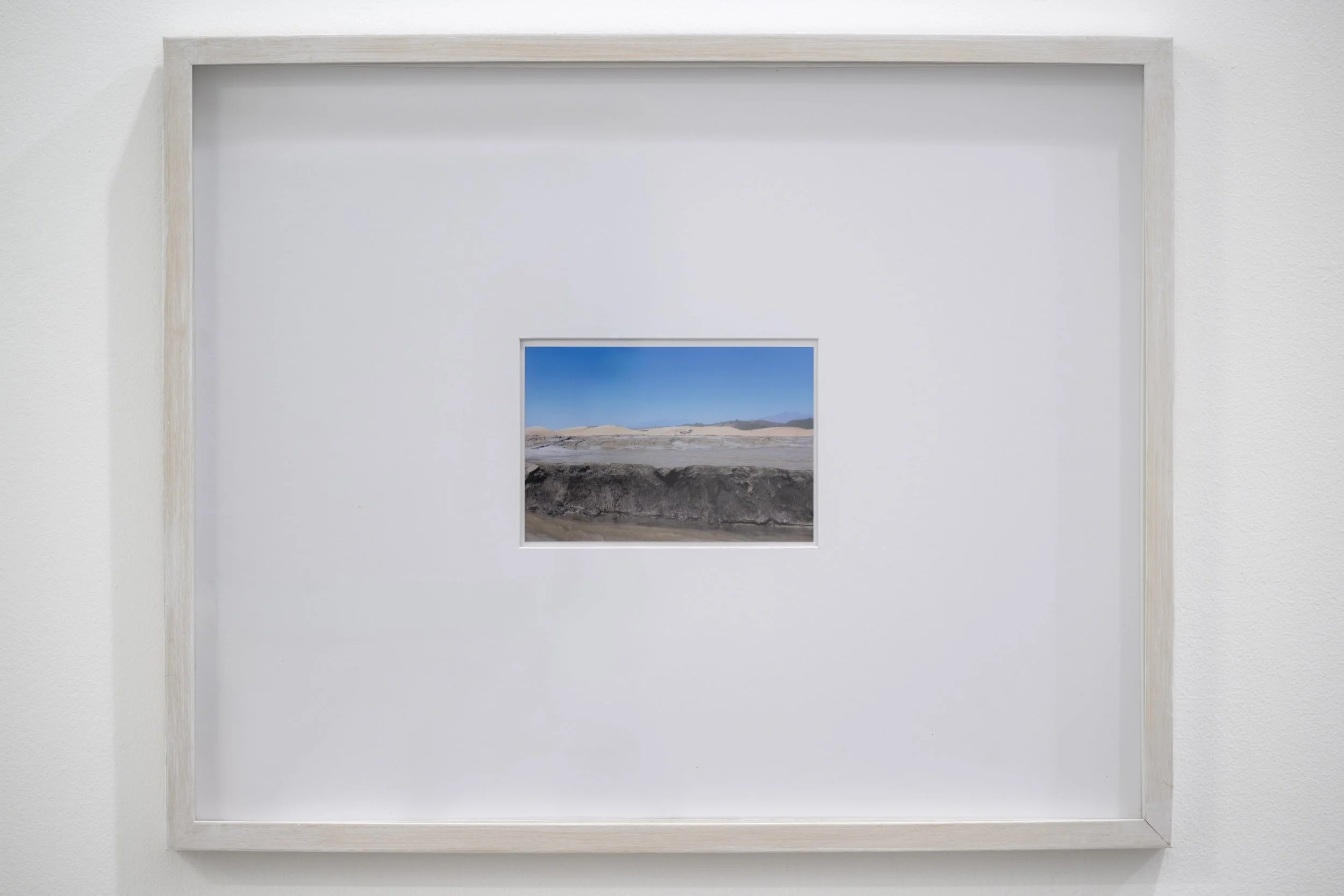
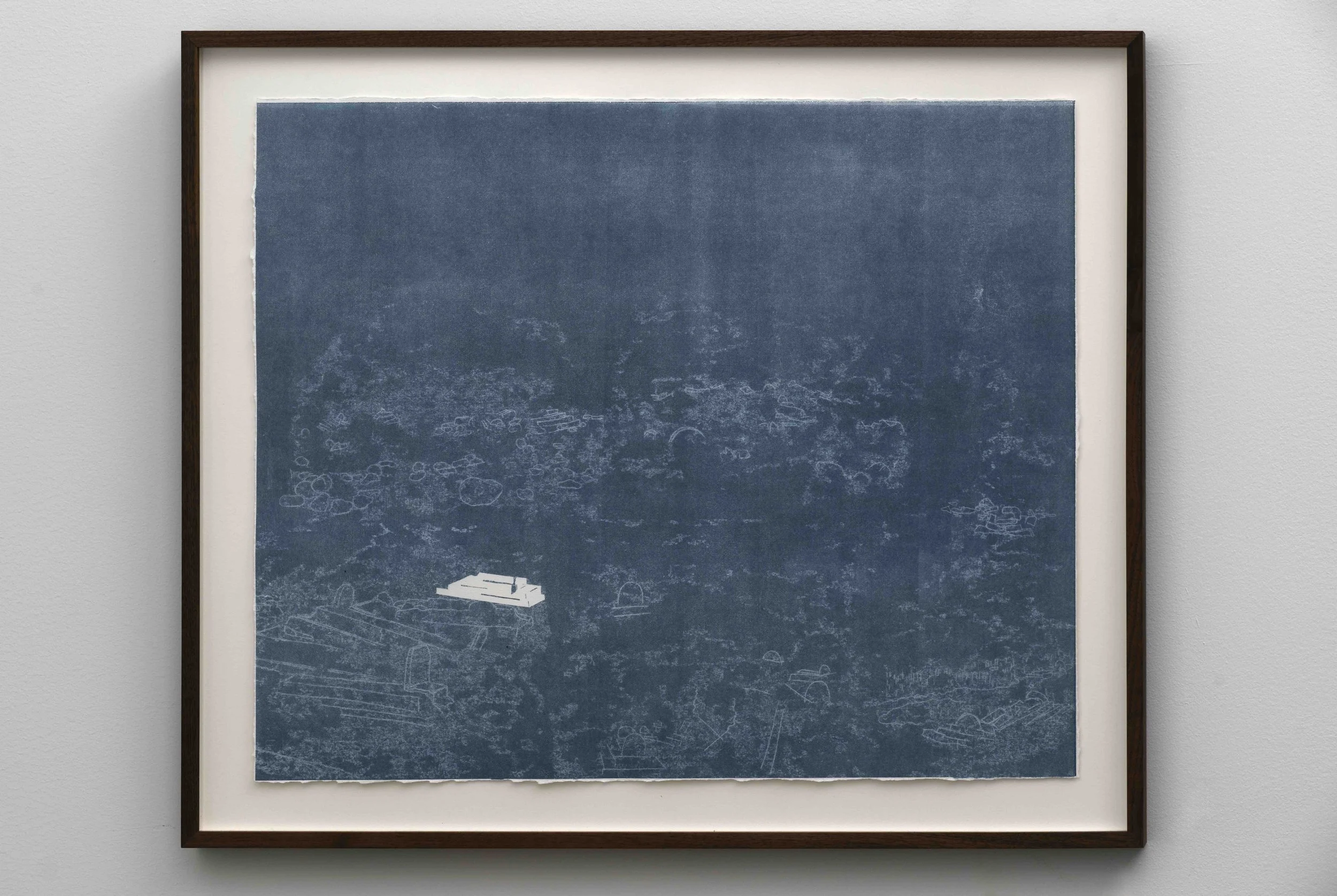
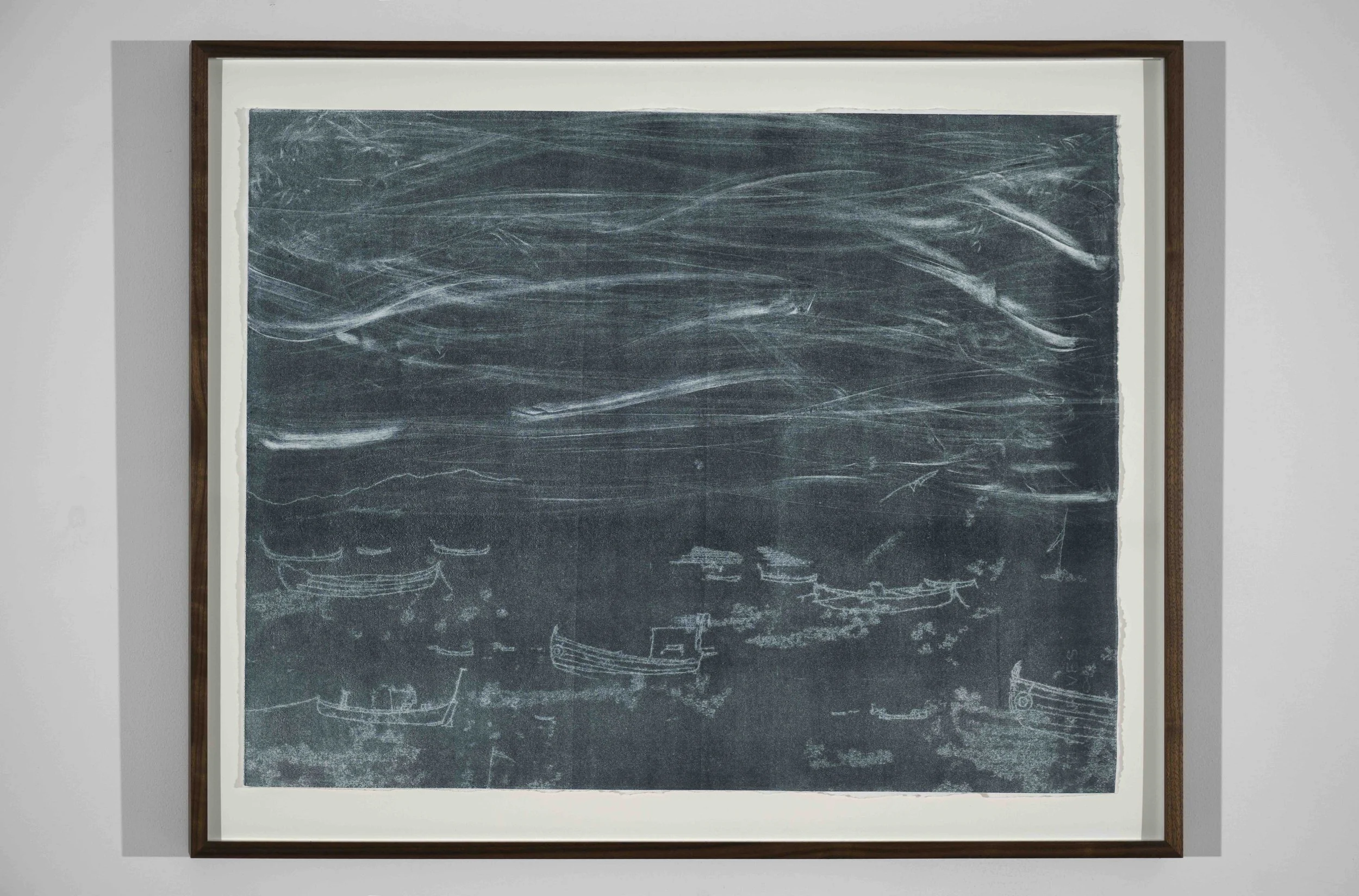
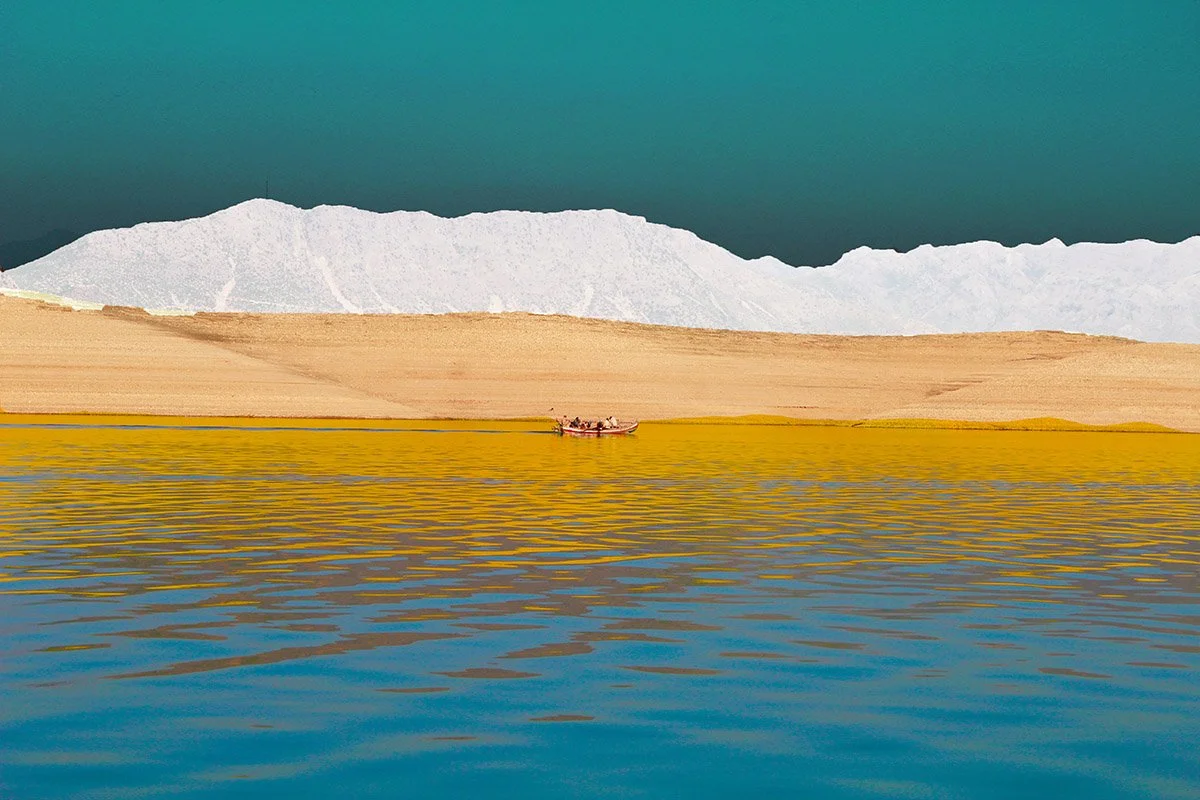
Rehman begins with particular, human-scaled forms. Water becomes the optic through which loss is apprehended: both an image of absence and the material force that claimed their father’s land. Yet the arid terrain and badlands that contain, redirect, or surround this water register another kind of intensity. They hold the reflected force of sunlight, drought, and exposure, situating environmental transformation within the lived conditions of place.
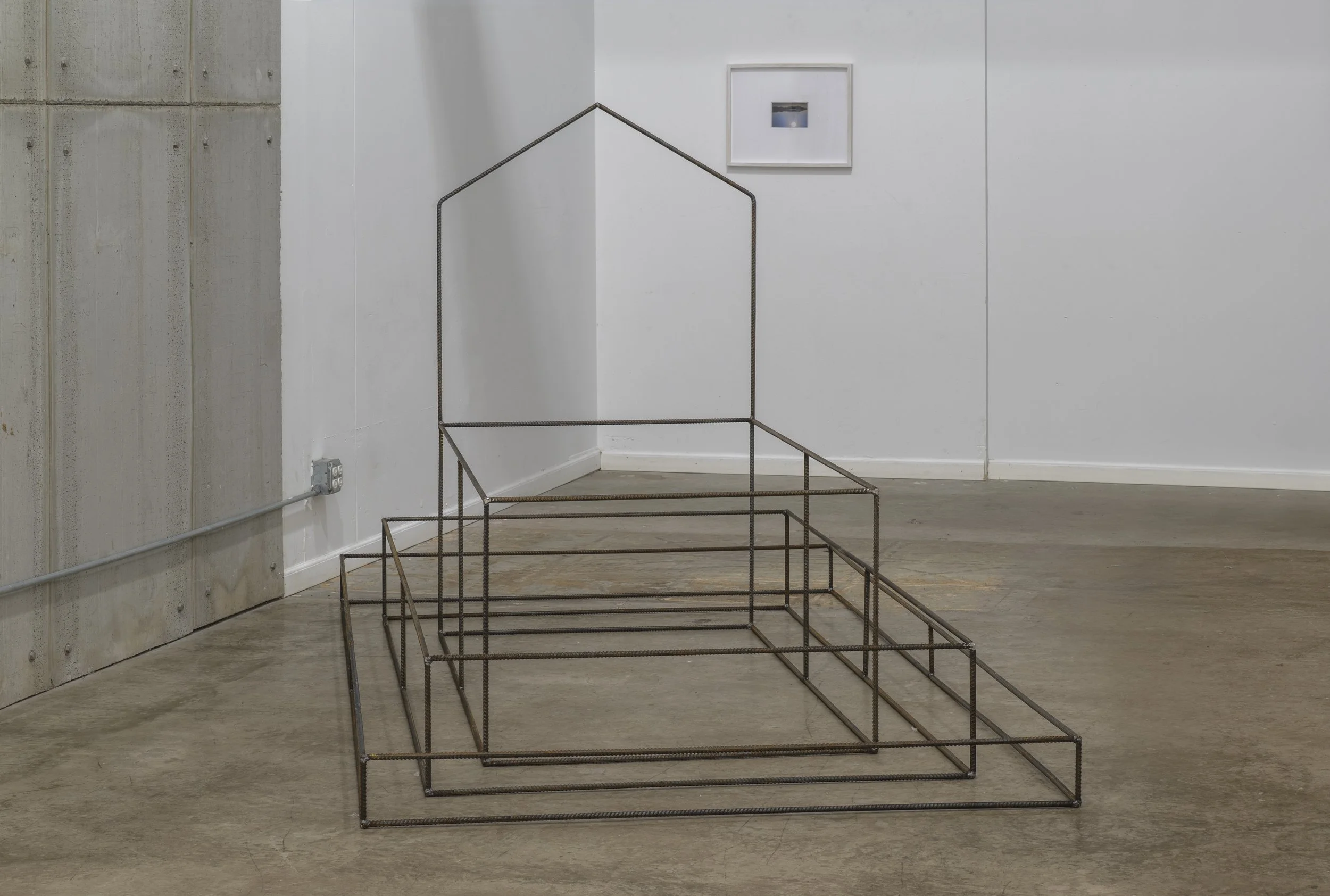
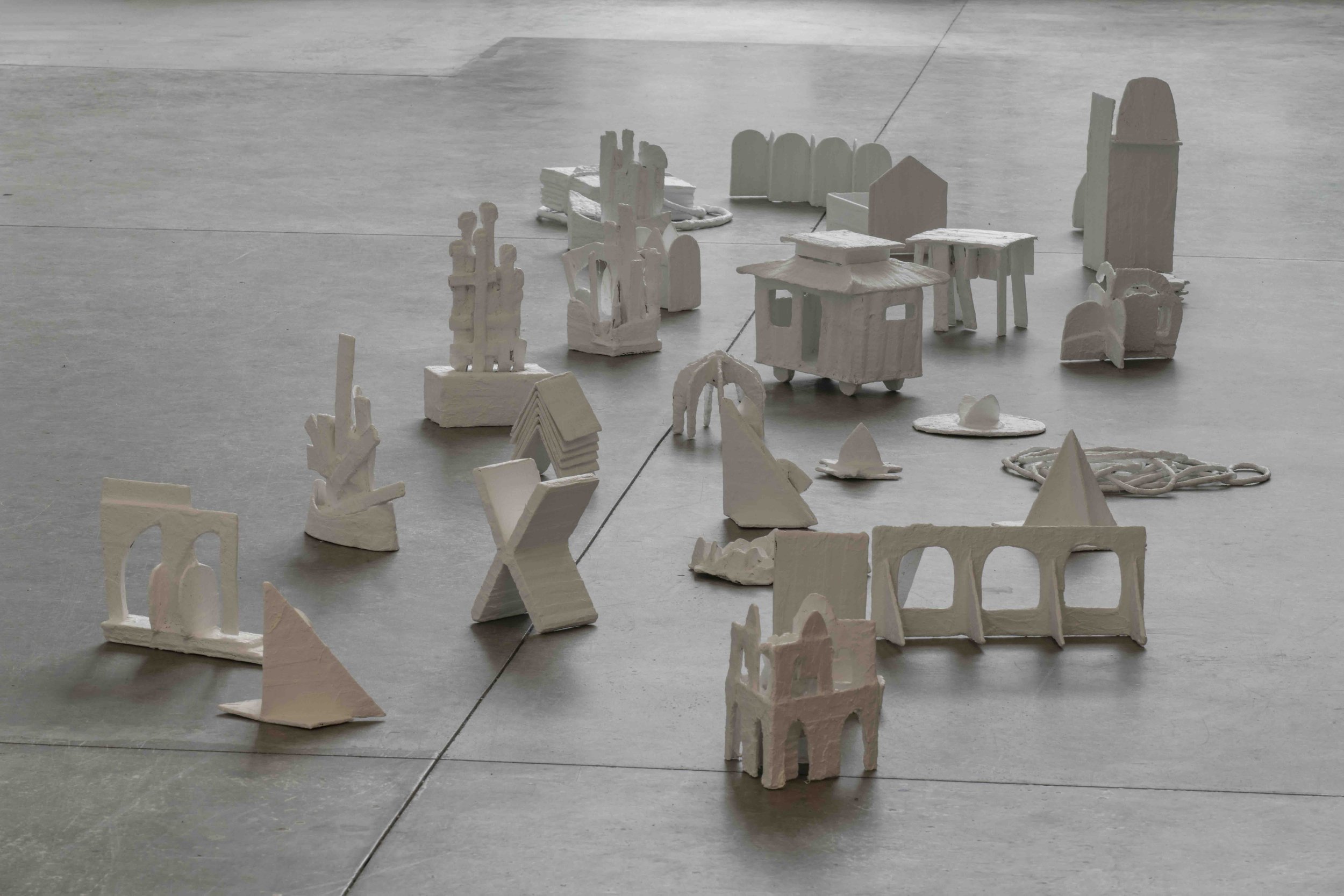
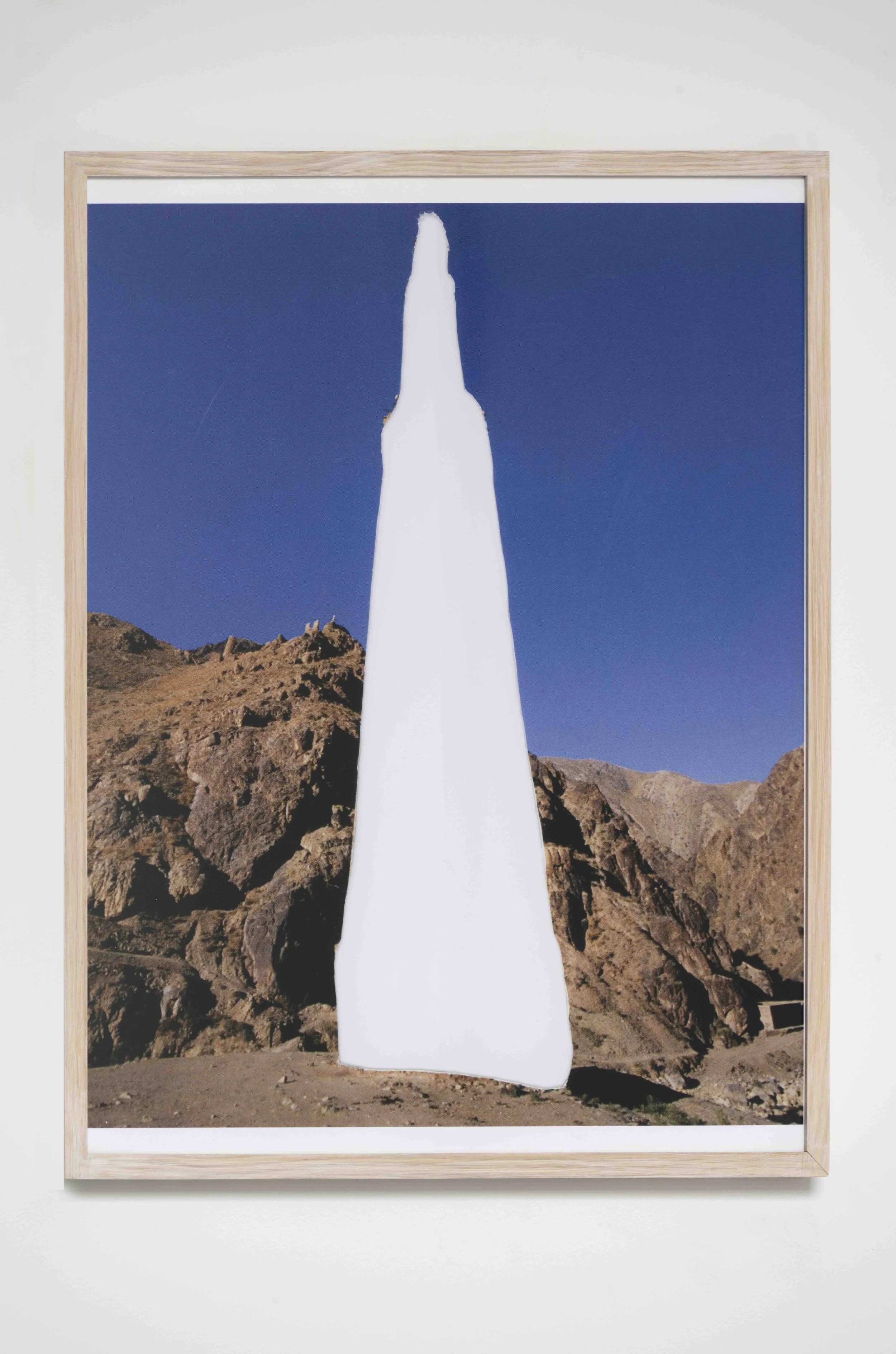
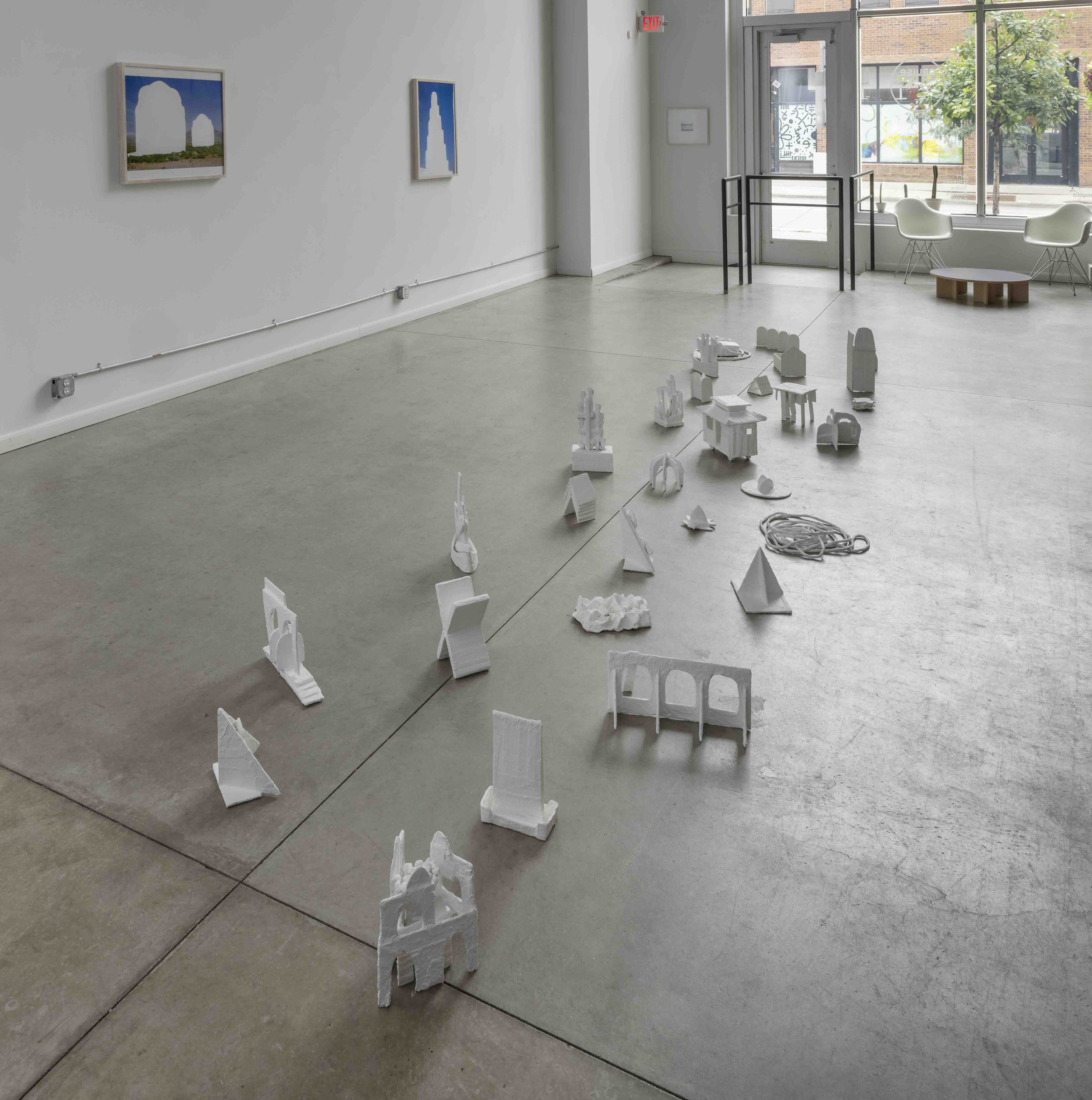
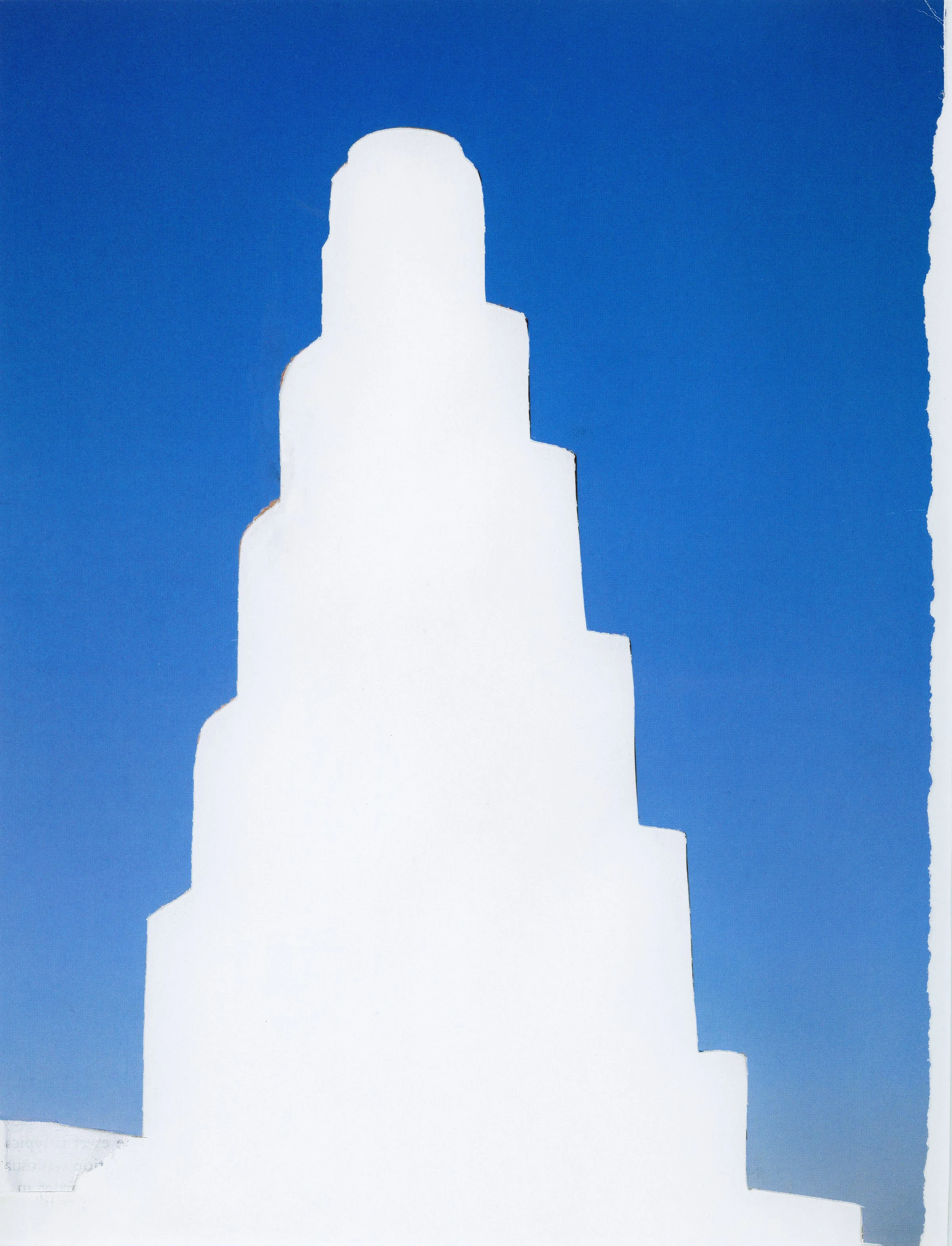
Architecture provides a foundational structure for Rehman’s visual language. The architectural images are fundamental because they can stand in for what may still remain beneath the waters of Khar Kot, as well as for the built environments of Haripur, where life was reconstituted and reclaimed. New York City, Rehman’s hometown, can be added to this psychic geography. A place of endless reanimation. As Michel de Certeau put it as the outsider looking uptown from the newly built World Trade Center in the 1970s seemingly in anticipation of its demise and the utopian limits of administrative power:
Unlike Rome, New York has never learned the art of growing old by playing on all its pasts. Its present invents itself, from hour to hour, in the act of throwing away its previous accomplishments and challenging the future. A city composed of paroxysmal places in monumental reliefs.The spectator can read in it a universe that is constantly exploding.
Erasure marks time if not modern progress in the end. True in this urban paragon, but also where an artery such as the Indus River is transformed into partitions or “lakes,” and electrical infrastructure is appropriated, the logic of utility and systems takes precedence over human life and family. We know this locally, if only by studying the immensity of the falls that bore Minneapolis, not to mention the entire intervention that is the Mississippi in the twentieth century. Gentrification may be the buzzword, yet it is development and engineering over decades of administrative decisions that braid families within their fortunes and follies.
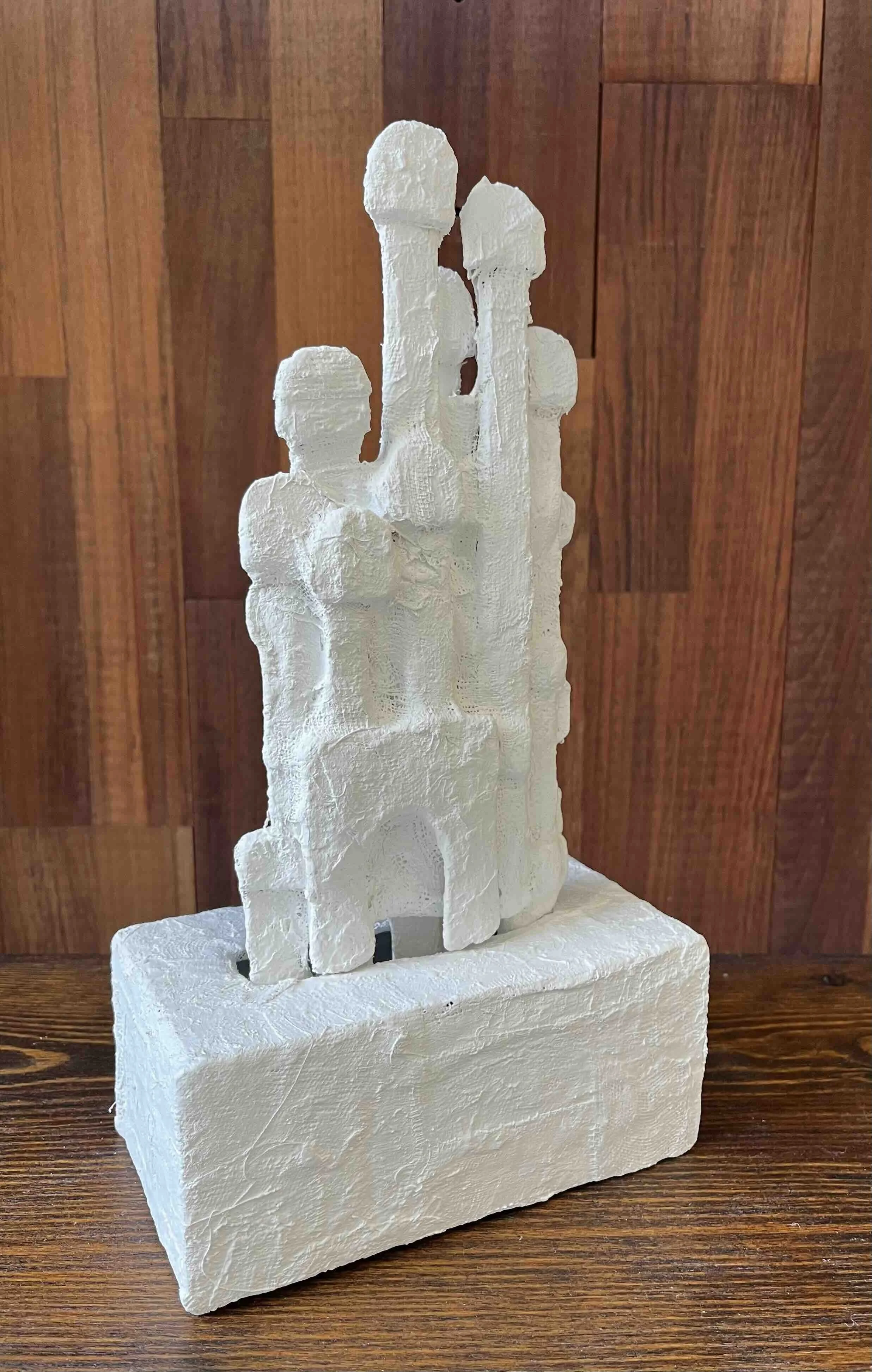
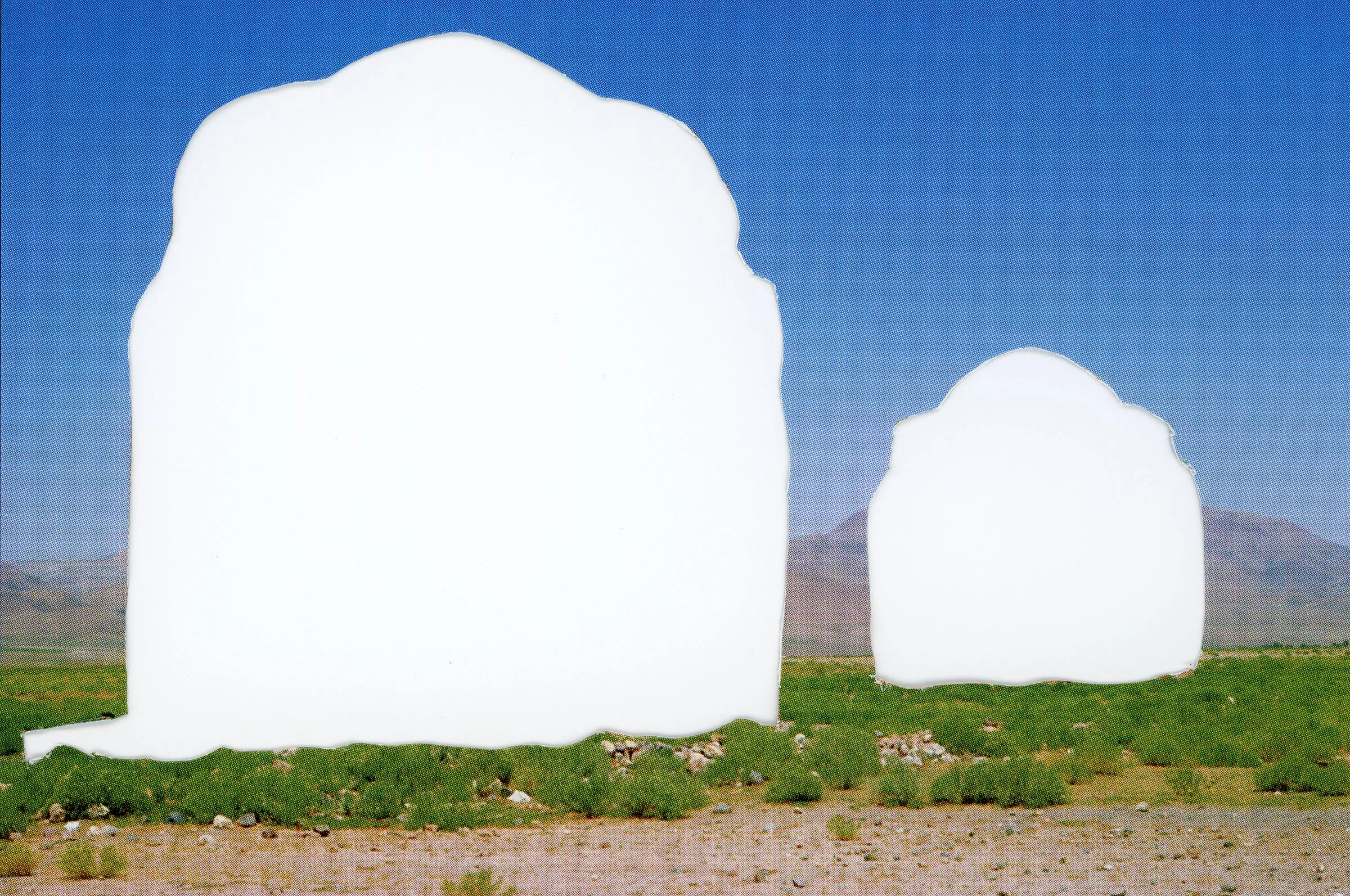
Water replaces loss along desert rivers too. Water is within the land in Rehman’s landscapes, not apart, and here a durable civilization persists however ghostly. Fragmented forms of habitation poke through blue veils; patterns occupy ground and what is seen is simultaneously present and gone. Architecture becomes both evidence and proxy—a record of endurance where direct access within from without is no longer linked, as the river is to the world beyond the valley.
Discoveries made during Rehman’s visits to ancestral homelands reveal an architecture that is mutable, adaptive, and at times illusive. These structures register resilience in relation to severe climate and to the large-scale infrastructural projects that encircle, partition, or erase home and/or land when viewed from a purely administrative, aerial perspective. They are not easily legible to outside systems of use or control. Their logics remain embedded in the knowledge of their builders and inhabitants; without being rendered transparent to external authority, they resist further administration.
These are images taken from the world that exist beyond the rationale of modern management. Like the desert dust, the images in Markers do not circulate in service of a mediascape. They depict architectures whose uses do not improve capital animation. Their relationship to loss is not speculative, anticipatory or appropriative. The loss is material, historical, ongoing and grounded in a critical regionalism the outsider may learn in time through a physical and psychic investment.
Rehman’s found objects and spaces mark refuge. They respond to the river rising and falling, naturally and artificially. They bring into focus a new earth, born hour-by-hour like our cities, that is a coeval threat and a respite. Already the architecture lies within the land upon which they would usually stand, shaped by the future of local conditions, inherited knowledge, and the demands of adaptation taken from the past.
–Matthew Schum, PhD
Artist BioSa’dia Rehman has exhibited widely at institutions including Tate Modern, Wexner Center for the Arts, The Fabric Workshop and Museum, Governors Island, Queens Museum, National Museum of Norway, Pakistan National Council of the Arts. They have been an artist-in-residence at ArtLab at Harvard University and are currently Visiting Assistant Professor of Art at the University of Minnesota Twin Cities.